Google Business Profile Optimization: The 2026 SA Guide
Why some Google Business Profiles rank in Maps and others don't — plus a practical checklist of the tweaks that actually move you above competitors.
Most local businesses set theirs up wrong. A handful of tweaks moves you above competitors in the Maps results.
If you run a plumbing business in Cape Town, a solar installation company in Pretoria, or an accounting practice in Durban, you've probably had the same frustrating experience. You search for your own service. A competitor appears at the top of the map. You scroll down to find yourself — sometimes on the second or third screen, sometimes nowhere at all.
You're not doing worse work than they are. In many cases you've been in business longer. So why does Google keep putting them first?
The short answer is that Google Business Profile is not a "set it and forget it" listing. It's a ranking system with rules, and most business owners never learn the rules. They claim the profile, add a phone number, upload one blurry photo, and move on. That's enough to exist on the map. It's nowhere near enough to win on it.
This guide explains exactly how Google decides which local businesses show up, in plain English, with no jargon and no scare tactics. By the end you'll know which improvements matter, which are a waste of time, and which myths are quietly costing you customers. Most of what follows you can do yourself, today, for free.
Table Of Contents
- What A Google Business Profile Actually Is
- How Google Maps Actually Works
- The Three Things Google Ranks On: Relevance, Distance, Prominence
- Setting Up The Foundations Correctly
- The Fields Most Businesses Ignore (And Shouldn't)
- Reviews: What Matters And What Doesn't
- Consistency: The Boring Thing That Quietly Wins
- Why A Google Business Profile Still Needs A Website
- How AI Search Is Changing Local Discovery
- Common Myths That Cost You Customers
- 15 Improvements You Can Make Today
- Frequently Asked Questions
- Where To Go From Here
What A Google Business Profile Actually Is
A Google Business Profile (GBP) is the free listing that appears when someone searches for your business or your service on Google Search and Google Maps. It's the box that shows your name, star rating, hours, photos, phone number, and a "Directions" button. It used to be called Google My Business, and before that Google Places, which is why you'll still hear all three names used interchangeably.
Here's the important part: your profile is often the first impression a customer has of you — before your website, before a phone call, before they've spoken to a single person. When someone searches "electrician near me" at 7pm because their power just tripped, they are looking at a small stack of Maps results and making a snap decision. Your profile is doing your sales pitch for you, whether you've optimised it or not.
The way people find local businesses has shifted almost entirely online. International consumer research shows the overwhelming majority of people search online at some stage when choosing a local business, and a large share do so every single day. South Africa follows these global trends with a lag, but the direction is unmistakable — mobile internet use here has grown rapidly and is now the dominant way many consumers get online.
What this means practically: the businesses that treat their profile seriously get chosen. The ones that treat it as an afterthought get skipped, no matter how good their actual work is.
How Google Maps Actually Works
Most people assume Google Maps ranks businesses the way normal Google search ranks websites. It doesn't, and understanding the difference is the single most useful thing in this guide.
Traditional (organic) search is largely about your website — its content, its structure, the other sites linking to it. Local search is about your business as an entity: where you are, what you do, how complete your information is, and how much trust Google has built up around you.
This is why a business with a weak website can still dominate the map, and why a business with a slick website can be invisible on it. They're two different systems that happen to overlap. The good news is that you can compete strongly in local Maps results even with a modest website — provided your profile is doing its job.
When someone searches for a local service, Google runs a quick calculation. It's asking three questions about every business in the area:
- Does this business do what the person is looking for?
- How close is it to the person searching?
- How well-known and trusted is this business?
Get all three right and you appear at the top. Get them wrong and you don't. Everything else in this guide is really about improving your answers to those three questions.
The Three Things Google Ranks On
Google itself has published the three factors that drive local ranking. This isn't a leaked secret or an SEO theory — it's Google's own stated guidance. The three factors are relevance, distance, and prominence. Let's take each in plain English.
Relevance: Does Your Profile Match What They Searched?
Relevance is how well your profile matches what someone typed. If a person searches "solar installer" and your profile says you're a "general handyman," Google has no strong reason to show you for solar — even if you install solar every week.
You improve relevance by telling Google clearly and completely what you do:
- Choosing the right primary category (more on this shortly)
- Adding secondary categories for your other services
- Listing your services individually, in your own words
- Writing a business description that names what you actually do
Relevance is the one factor you have the most direct control over, and it's the one most businesses get badly wrong. A vague, half-filled profile simply doesn't match many searches.
Distance: How Close Are You To The Searcher?
Distance is exactly what it sounds like — how far your business is from the person searching, or from the location they included in their search ("plumber Stellenbosch"). You obviously can't move your business, but distance isn't purely fixed. You can influence how Google understands your reach through service areas — the towns and suburbs you tell Google you serve. A mobile mechanic who covers the whole Northern Suburbs should say so, rather than pinning themselves to one street.
You can't fake distance, and you shouldn't try. But you can make sure Google knows the full geographic area you legitimately cover.
Prominence: How Well-Known And Trusted Are You?
Prominence is Google's measure of how established and trustworthy your business is. It's built from a mix of signals:
- The number and quality of your reviews
- Mentions of your business across the web (called citations)
- Links to your business from other websites
- Your overall presence and information consistency online
Prominence is the slowest of the three to build because it accumulates over time — but it's also the most durable advantage once you have it. A competitor can't copy your review history or your years of consistent presence overnight.
The key insight: You don't manipulate these factors — you feed them accurate, complete information and let them work. Google explicitly warns against fake reviews, keyword-stuffed business names, and fake locations. Those tactics get profiles suspended. Everything in this guide is about doing the legitimate version properly, which is what actually wins long-term.
Setting Up The Foundations Correctly
Before the clever stuff, the basics have to be right. A surprising number of businesses lose rankings because of a foundational mistake made on day one and never revisited.
Your Business Name
Use your real business name — exactly as it appears on your signage, invoices, and other listings. Do not stuff keywords into it. "Mike's Plumbing" should be "Mike's Plumbing," not "Mike's Plumbing | Best Emergency Plumber Cape Town 24/7." Keyword-stuffed names violate Google's guidelines and can get you suspended. They can also look untrustworthy to customers, which defeats the point.
Your Primary Category
This is one of the highest-impact settings on your entire profile, and it's frequently wrong. Your primary category tells Google what your business fundamentally is. A solar installer whose primary category is set to "Electrician" is competing in the wrong race.
Choose the category that most precisely describes your core business. Then add secondary categories for the other genuine services you offer. An electrician who also does solar might use "Electrician" as primary and "Solar energy equipment supplier" as secondary. Be accurate, not aspirational — only list categories for work you actually do.
Address And Service Areas
If customers come to you (a shop, a practice, a workshop), enter your full address and make sure Google has verified the location. If you go to customers (plumbers, mobile mechanics, cleaners), you can set service areas instead of, or in addition to, a physical address. List the suburbs and towns you genuinely serve. Don't list the entire province if you only work in one metro — over-claiming can dilute your relevance for the areas you actually operate in.
Contact Details And Hours
Your phone number, website link, and business hours need to be present and accurate. Wrong hours are worse than no hours — a customer who drives to a "closed" business that's actually open, or phones an "open" business that's shut, rarely comes back. Keep public holiday hours updated too. In South Africa, with our number of public holidays, this matters more than most owners realise.

The Fields Most Businesses Ignore
This is where you overtake competitors, because most of them stop after the basics. Google rewards completeness — a fully filled profile signals a real, active, trustworthy business. Here are the fields that quietly separate the top of the map from the bottom.
Photos And Videos
Profiles with good photos get more clicks and enquiries. Upload real, high-quality images: your team, your vehicles, completed work, your premises, your equipment. For trades, before-and-after shots of jobs are powerful. Avoid stock photos — customers can tell, and they build no trust. Add new photos regularly rather than dumping them all at once; ongoing activity signals an active business.
Business Description
You get space to describe your business in your own words. Use it to explain what you do, who you serve, and what makes you a sensible choice — in plain language, not marketing fluff. Naturally include the services and areas you cover. Don't keyword-stuff; write it for a human who's deciding whether to call you.
Services And Products
List your services individually. Not just "Plumbing" but "Geyser installation," "Blocked drain clearing," "Leak detection," "Bathroom renovation." Each one is a chance to match a specific search. Add short descriptions and prices where it makes sense. This is one of the most under-used relevance boosters available.
Attributes
Attributes are the small tags that answer common questions: "Wheelchair accessible," "Online estimates," "Women-owned," "24-hour service," "Card payments accepted." They're easy to add and they help you appear in filtered searches and match what customers care about.
Questions & Answers
Google lets anyone ask a question on your profile — and anyone can answer, including you. Don't leave this to chance. Post your own frequently asked questions and answer them yourself: "Do you offer emergency call-outs?" "Which areas do you cover?" "Do you give free quotes?" It's free content that pre-empts hesitation.
Google Posts
Posts are short updates that appear on your profile — a special, a new service, a completed project, a seasonal reminder. They show Google (and customers) that the business is active. They're not a magic ranking lever, but an active profile is a positive signal and posts keep yours looking alive rather than abandoned.
Messaging And Bookings
Many South African customers prefer to message rather than call. Google's messaging feature lets them contact you directly from the profile. If you offer appointments, booking integration lets them book without picking up the phone. Both reduce the friction between "found you" and "chose you" — which is exactly where enquiries are won or lost.
Reviews: What Matters And What Doesn't
Reviews are the part everyone knows about, but few handle well.
Reviews matter enormously — the vast majority of consumers read them before choosing a local business, most read several, and many won't consider a business below a certain star rating. Reviews feed directly into prominence, and they're often the deciding factor when a customer is choosing between two similar businesses. But there's more nuance than "get five stars."
Quantity, Quality, Recency, And Responses
Google looks at more than your average score. It considers how many reviews you have, how recent they are, and whether you respond to them. A business with 60 recent reviews and thoughtful responses generally signals more trust than one with 8 reviews from three years ago — even at the same star rating.
Responding to reviews matters twice over. It signals an engaged business to Google, and research shows customers are meaningfully more likely to choose a business that responds to its reviews. Respond to the good ones with genuine thanks. Respond to the bad ones calmly and professionally — future customers read how you handle criticism, and a measured reply to an unfair review often wins more trust than the review lost.
How To Get Reviews Ethically
The right way is simple: ask happy customers, at the right moment, and make it easy. Send them your review link by WhatsApp right after a job well done. Don't offer payment or incentives for reviews, don't write fake ones, and don't have staff post reviews — Google detects and penalises this, and it's a fast route to a suspended profile. Steady, genuine reviews from real customers beat any shortcut.
A realistic target: A consistent trickle of honest reviews — a few a month, responded to promptly — will outperform a one-time burst almost every time. Google trusts steady patterns.
Consistency: The Boring Thing That Quietly Wins
This section isn't exciting, but it's responsible for more ranking problems than almost anything else.
NAP stands for Name, Address, Phone number. Google builds confidence in your business partly by checking whether your details match across the web — your profile, your website, your Facebook page, directory listings, and so on. When they all agree, Google trusts the information. When they conflict — an old phone number here, a slightly different address there, "Street" in one place and "St" in another — that trust erodes, and so can your ranking.
The fix is unglamorous but effective:
- Write your business name, address, and phone number exactly the same way everywhere
- Fix old listings with outdated details
- Make sure your website shows the same information as your profile
- When something changes (new number, new premises), update it everywhere, not just on Google
Citations — mentions of your business on other reputable sites and directories — reinforce this. So do local backlinks, which are links to your business from other local websites (a supplier, an industry body, a local news mention, a chamber of commerce). These build prominence over time. You don't need hundreds; a handful of genuine, relevant ones is worth more than a pile of spammy directory entries.
Why A Google Business Profile Still Needs A Website
Here's a question we get constantly: "If my Google Business Profile brings in customers, why do I need a website at all?"
It's a fair question, and the honest answer is that a profile alone can work — but it leaves a lot on the table. A profile and a website together are far stronger than either one alone. Here's why.
A Website Increases Trust
A profile tells customers you exist. A website tells them you're serious. Research consistently shows that consumers perceive businesses with professional websites as more established, more professional, and more reliable — particularly for higher-value work and professional services. When someone is about to spend R30,000 on solar or hire an attorney, a real website reassures them in a way a Maps listing can't.
A Website Improves Conversions After They Find You
Your profile gets the customer's attention. Your website closes the deal. It's where you can show detailed service pages, case studies, certifications, pricing guidance, team profiles, and answers to the questions that make someone hesitate. The modern buying journey is multi-touch — people discover you, then research, then compare, then contact. Businesses without websites tend to lose customers precisely at the research and comparison stages, where people want detail that a profile can't hold.
A Website Strengthens Your Local SEO
Remember that local ranking (Maps) and organic ranking (website) are two systems that overlap. A good website feeds structured information, content, and consistency back into the picture — reinforcing your relevance and prominence. Businesses with both a profile and a website generally outperform those with a profile only, in visibility, clicks, and enquiries.
A Website Helps AI Understand You
This is increasingly important, and it's covered in the next section — but in short, AI systems lean heavily on website content to understand and recommend businesses. A profile alone gives them far less to work with.
Important honesty: A website by itself does not guarantee higher Maps rankings. Anyone who tells you "just build a website and you'll rank #1" is overselling. The point is that a profile and a website reinforce each other. The profile wins the local search; the website wins the customer and feeds the wider system. They're partners, not substitutes.
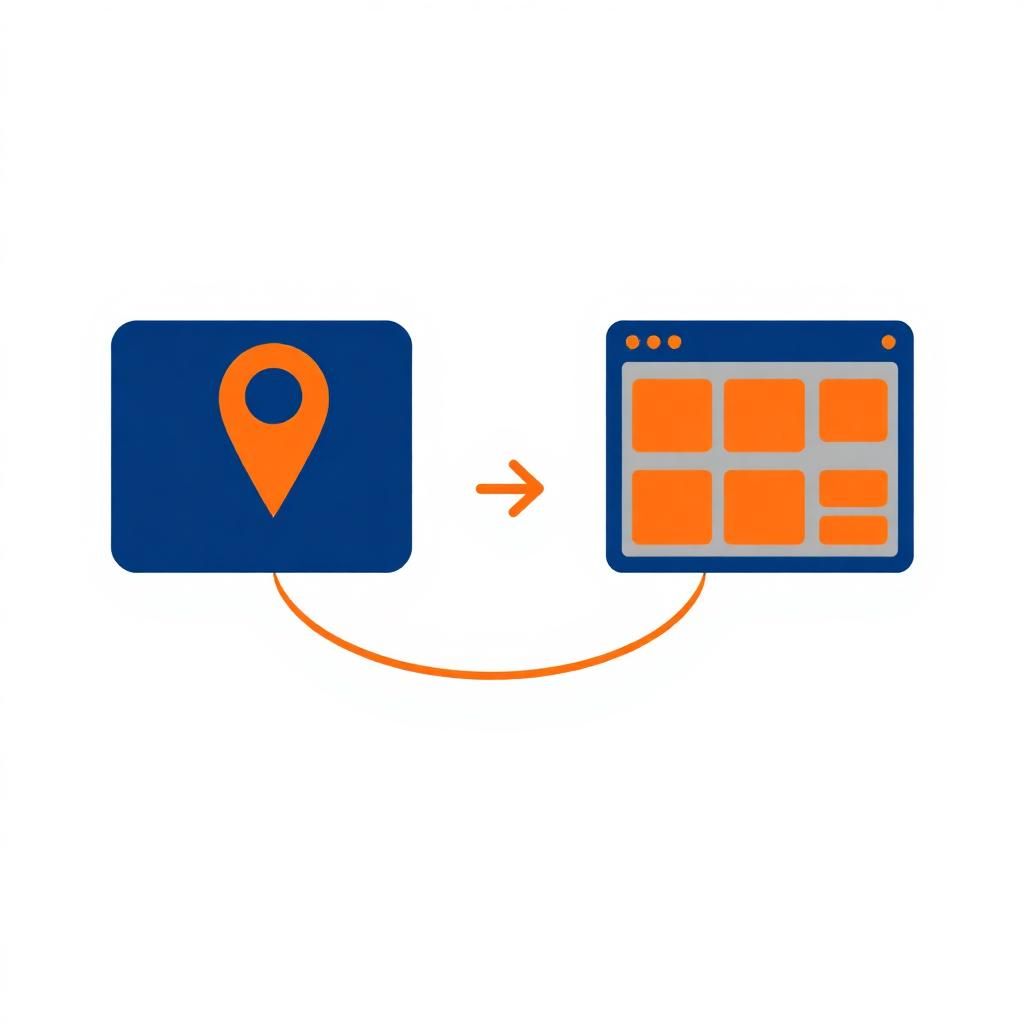
How AI Search Is Changing Local Discovery
Something significant is shifting in how people find businesses, and it's worth understanding early because most of your competitors haven't clocked it yet.
Tools like ChatGPT, Google's Gemini, Claude, Perplexity, and Google's AI Overviews increasingly answer questions directly, pulling from across the web instead of just handing back a list of blue links. Someone might now ask an AI assistant, "Who's a reliable solar installer in Somerset West?" and get a short, confident recommendation — rather than a page of results to sift through themselves.
Where AI Gets Its Information
AI systems build their answers from the sources they can find and trust:
- Website content — the detailed, structured information on your own site
- Consistent business information across platforms (that NAP consistency again)
- Authoritative mentions and reviews from around the web
Notice what's missing if you have no website: one of the richest sources AI draws on simply isn't there. Businesses without websites risk being underrepresented — or left out entirely — of AI-generated recommendations, especially for anything beyond the simplest query.
Why "Structured Information" Matters (In Plain English)
AI, like Google, understands you best when your information is clear, complete, and consistent. A profile that clearly states what you do, where, and for whom — backed by a website that spells it out in detail — gives these systems something solid to work with. A vague profile and no website gives them almost nothing, so they recommend someone else.
The businesses that will do well in AI-driven discovery are the ones with both a strong, accurate profile and a professional website that reinforces it. This is a five-to-ten-year trend, not a fad — and getting your foundations right now means you're already positioned when it becomes the norm.
Common Myths That Cost You Customers
Let's clear up the beliefs that keep good businesses stuck at the bottom of the map.
"We only need Facebook."
Facebook is useful for engagement, but it's what's often called "rented land" — you don't control the algorithm, you don't own the data, and it carries limited SEO value. It doesn't feed local ranking the way a profile and website do, and it's a weaker trust signal for professional services. Use it as a supplement, not a foundation.
"We already have WhatsApp."
WhatsApp is excellent for South African businesses — for communication. It's how many of your customers will actually contact you. But it does nothing for discovery. Nobody finds you on WhatsApp who didn't already have your number. It's the last step of the journey, not the first. You still need to be found before anyone can message you.
"Our referrals are enough."
Word of mouth is powerful and you should never take it for granted. But referrals don't scale, and they don't reach the customers outside your existing network — including the person who just moved to the area, or the one whose usual plumber didn't answer. Worse: many people who get a referral still Google the name to check reviews before calling. If your profile looks thin or neglected at that moment, the referral can evaporate.
"Our Google profile is all we need."
A profile is essential, but on its own it limits how much verifiable information customers and AI systems can access about you. It's the front door — the website is the rest of the house. As shown above, the two together consistently outperform a profile alone.
"Reviews are the only ranking factor."
Reviews are important, but they're one part of prominence, which is one of three factors. A business can have great reviews and still rank poorly because its category is wrong, its profile is incomplete, or its information is inconsistent. Reviews won't save a badly set-up profile.
"The oldest business always ranks first."
Longevity helps build prominence, but it doesn't override relevance and completeness. A well-optimised newer business routinely outranks an older one that never bothered to fill in its profile properly. Google ranks the profile, not the founding date.
"You can buy your way to the top of Maps."
You cannot pay Google to rank higher in the organic Maps results. You can pay for ads, which appear marked as ads, but the organic local ranking is earned through relevance, distance, and prominence. Anyone selling "guaranteed #1 Maps ranking" for a fee is selling something Google doesn't offer.
15 Improvements You Can Make Today
Here's your practical checklist. Each item includes why it matters, so you can prioritise. Most take minutes.
- 1. Claim and verify your profile. Nothing works until Google confirms the business is really yours. Why: unverified profiles have limited visibility and you can't edit key fields.
- 2. Set the correct primary category. Why: it's one of the highest-impact relevance signals — the wrong category puts you in the wrong race.
- 3. Add secondary categories for your other services. Why: they help you match a wider range of searches without diluting your main focus.
- 4. Use your real business name — no keyword stuffing. Why: stuffed names violate Google's guidelines and risk suspension.
- 5. Complete every field. Why: Google rewards completeness; a full profile signals an active, trustworthy business.
- 6. Add accurate service areas. Why: helps you appear for the suburbs and towns you genuinely cover.
- 7. Upload real, high-quality photos — and keep adding them. Why: profiles with good photos get more clicks and enquiries, and ongoing uploads signal activity.
- 8. List your services individually with descriptions. Why: each service is another chance to match a specific customer search.
- 9. Write a clear, human business description. Why: it reinforces relevance and reassures customers, in your own words.
- 10. Keep your hours accurate, including public holidays. Why: wrong hours cost you real customers and damage trust fast.
- 11. Collect reviews ethically and steadily. Why: reviews drive prominence and are often the deciding factor between you and a competitor.
- 12. Respond to every review, good and bad. Why: it signals an engaged business and makes customers more likely to choose you.
- 13. Make your NAP identical everywhere online. Why: consistent information builds Google's trust; conflicting details erode your ranking.
- 14. Link to a professional website. Why: it increases trust, improves conversions, strengthens local SEO, and gives AI systems more to work with.
- 15. Post occasional Google Posts and answer your own FAQs. Why: an active profile is a positive signal and pre-empts customer hesitation.
Work down this list once, then revisit it every few months. Local ranking rewards ongoing attention, not a single burst of effort.

Frequently Asked Questions
How long does it take to see results from optimising my profile?
There's no fixed timeline. Relevance improvements (categories, services, description) can show effects relatively quickly. Prominence improvements (reviews, citations, consistency) build gradually over weeks and months. Treat it as steady maintenance, not a one-off fix.
Do I really need a website if my Google Business Profile is doing well?
You can operate without one, but you're leaving trust, conversions, and AI visibility on the table. A profile and a website reinforce each other — the profile wins the local search, the website wins the customer and feeds the wider ecosystem. For higher-value services especially, a website is close to essential.
Can I pay Google to rank higher in Maps?
No. You can pay for ads, which are labelled as ads. The organic Maps ranking is earned through relevance, distance, and prominence. Ignore anyone promising a guaranteed paid #1 spot.
How many reviews do I need to rank well?
There's no magic number. Google weighs quantity, quality, recency, and your responses together. A steady stream of genuine, recent reviews with thoughtful replies beats a large pile of old ones — and beats any attempt to buy or fake them, which risks suspension.
What's the single most common mistake?
An incomplete profile with the wrong primary category. Fixing just those two things puts many businesses ahead of competitors who never bothered.
Is WhatsApp enough on its own?
No. WhatsApp is great for communication but does nothing for discovery — people can only message you if they've already found you. It's a contact channel, not a way to get found.
Will AI tools like ChatGPT recommend my business?
Increasingly, yes — but only if there's enough clear, consistent information for them to trust. That means an accurate, complete profile and, ideally, a professional website. Businesses with neither risk being left out of AI recommendations.
Should I list every possible category to appear in more searches?
No. Only list categories for services you genuinely provide. Over-claiming dilutes your relevance and can confuse Google about what you actually do. Precision beats breadth.
Where To Go From Here
The strongest local presence isn't one tool — it's several working together. Not a website versus a Google Business Profile, but both, alongside the things that make a business trustworthy: genuine reviews, accurate information, useful content, referrals, and a sensible social presence. These are complementary, not competing.
So here's a useful exercise. Open your own Google Business Profile right now, as if you were a customer seeing it for the first time. Ask yourself honestly:
- Is the primary category right?
- Is every field filled in?
- Do the photos make me look like a real, active, professional business?
- Are there recent reviews, and have I responded to them?
- Does my information match everywhere else online?
- If a customer — or an AI assistant — wanted to know more, is there a proper website to send them to?
If you found gaps, you've just found your ranking opportunity. The businesses above you on the map usually aren't better at the work. They're just better at answering Google's three questions: what you do, where you do it, and how much they can trust you.
Give customers — and Google — enough confidence to choose you, and the map tends to sort itself out.
AI Is Changing How Customers Find You
ChatGPT, Google AI and voice assistants are the new Yellow Pages. Here's how to make sure your business gets recommended.
5 Ways a Website Wins Your Trade Business More Local Jobs in SA
Your trade business is losing work every week without a website. Here is what it costs you, backed by research, and the simple fixes that bring local customers in.